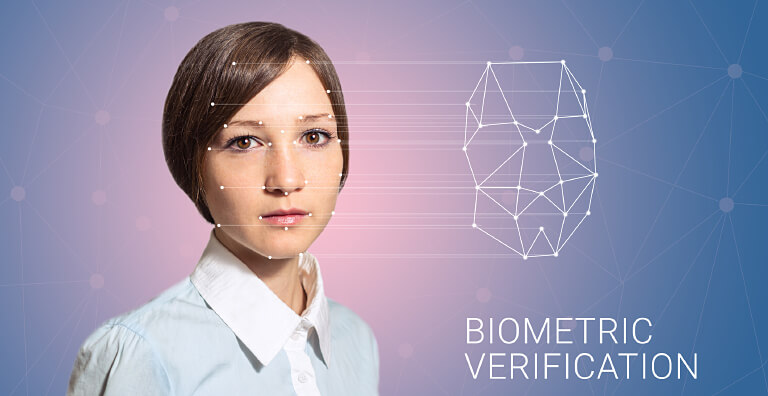
There’s no room for identity mistakes in healthcare. Picture a patient arriving at a clinic, anxious and in pain. She’s asked to confirm her identity — again. A misspelled name, a mismatched record, or a forgotten ID card could delay care or, worse, lead to the wrong treatment. These aren’t just administrative hiccups — they’re risks to patient safety, trust and outcomes.
Patient misidentification costs the healthcare system billions of dollars each year. But the real cost? Compromised care, frustrated staff and patients who feel invisible.
There’s no excuse for identity errors today. Facial recognition technologies, paired with advanced patient authentication and engagement platforms, are now available to help healthcare organizations modernize operations and eliminate identification errors.
If your organization hasn’t yet implemented biometrics to protect patients and streamline workflows, read on to learn what to look for in a patient verification system built for healthcare.
Facial Recognition: A Prescription for Optimal Healthcare
Facial recognition isn’t just a tech upgrade — it’s peace of mind for providers and patients.
Accurate, seamless patient verification using facial recognition ensures the right patient receives the right care, every time. It also automates routine procedures, reduces friction and improves outcomes across the care journey, from pre-visit to post-visit.
These advantages aren’t just operational wins — they transform the patient journey.
Benefits include:
- Touchless and hygienic identification — ideal for infection control
- Irrefutable proof of presence — one face, one patient, one record
- Seamless check-in and verification — reduced wait times and stress
- Medical record accuracy — no duplicates, no mismatches
- Fraud prevention — essential to protect resources and the eligibility of care
- Right treatment, right patient — every time
- Streamlined clinician workflows — more time to focus on care
- Secure data handling — critical for HIPAA and GDPR compliance
- Faster claims processing — vital to accelerate revenue cycles and boost financial performance
Imagine that same patient leaving the clinic reassured — her care delivered without delays or errors because her identity was verified instantly and securely. This is the true power of facial recognition in healthcare: fewer administrative hurdles, more time for care and a patient experience built on confidence and dignity. In healthcare, that’s not just technology — it’s assurance.
The Anatomy of a Highly Accurate Facial Recognition System
Not all facial recognition systems are created equal. In healthcare, precision is non-negotiable.
Webcams and basic capture devices fall short in healthcare settings. They lack the precision required when patient identity is at stake, and even small errors can lead to serious consequences.
That’s why healthcare organizations need high-performing facial recognition technology — one that delivers fast, accurate identification and elevates the entire patient experience.
Here's what to look for:
- Unbiased Matching Performance — A common challenge with facial recognition technologies is matching certain demographics. Choose a system trained on diverse, ethically sourced datasets to ensure fair and accurate identification across all demographics.
- Industry-Leading Presentation Attack Detection (PAD) — PAD thwarts spoofing attempts when fraudsters try to trick the system by using 3D masks, high-quality pictures, digital images or videos. Look for biometric technologies with advanced liveness detection that comply with the ISO/IEC 30107-3 standard to protect against spoofing.
- Edge Processing — Systems that process data locally offer faster performance, stronger security and better compliance with privacy regulations like HIPAA and GDPR.
A Healthy Partnership: HID Facial Recognition + CERTIFY Health Platform
The outlook for patient identification is excellent when facial recognition is applied across healthcare journeys. HID’s proven U.ARE.U Face Module, integrated with CERTIFY Health’s patient engagement and authentication platform, delivers speed, accuracy and peace of mind — from check-in to claims payout.
Together, they help healthcare organizations protect patients, empower staff and improve outcomes.
Additional resources: